
Secure Land Loans for Bad Credit to Build Your Dream Home Now
Last updated: 2026-10-17
Locating the perfect piece of earth is usually a breeze compared to securing the funding to purchase it. For many folks, the dream of owning a secluded wooded parcel or a peaceful countryside plot feels like chasing a mirage. Often, a less-than-stellar credit history stands like a heavy barricade in your way.
Most conventional banks will likely turn up their noses if your score falls short of their requirements. They frequently demand a down payment ranging from 20% to 30%. This is a massive mountain to climb for first-time buyers who don’t have that much cash tucked away in a bank account.
To these lenders, undeveloped soil is a high-risk bet. A house provides a physical structure that acts as collateral if things go south with the mortgage. However, raw acreage offers no such safety net for the bank. This reality makes navigating the financing landscape a bit of an uphill battle.
You essentially need to hunt for lenders who value the potential of the dirt itself. They need to see the intrinsic worth in the landscape rather than just obsessing over your credit report. Finding those specific lenders is the secret to getting your hands on that property.
This guide highlights various ways to leap over those financial obstacles. Whether you are hunting for a tiny garden plot or a vast stretch of acreage for a full homestead, you must grasp your choices. Knowing your options is the key to success.
First, you must learn to distinguish between different types of property. A “raw land loan” applies to completely undeveloped earth. On the other hand, a “finished lot” comes with road access and utility connections ready to go. Recognizing this distinction is your opening move toward finding the right capital provider.
- Acorn Finance
- JetzLoan
- LightStream
- Country Bank
- Lendersa
- USDA
Our Methodology for Assessing Land Financing
We began our analysis by gauging how approachable these loan products are for various credit backgrounds. It isn’t a one-size-fits-all scenario in the lending world. Understanding the gap between private capital, hard money, and federal assistance is absolutely paramount for any buyer.
Think of it like choosing a vehicle for a long road trip versus a quick sprint through town. A lender offering immediate liquidity might not suit a decades-long mortgage commitment. For instance, while unsecured personal loans provide lightning speed, you will likely pay a premium in interest compared to a standard mortgage backed by your acreage.
On the flip side, waiting on a conventional mortgage can feel like watching paint dry, often taking upwards of 45 days to finalize. In that stressful window, your ideal parcel of earth might slip through your fingers to another buyer. We also weighed how much a credit inquiry might dent your score during the hunt.
Fortunately, several companies permit you to browse interest rates via a “soft pull” that leaves your credit score untouched. This is a total game-changer when you need to gauge your financial strength before making a serious bid on a plot of land.
Honesty was our North Star throughout this investigation. We scrutinized the velocity of fund disbursement, the sheer difficulty of the paperwork, and the specific assets needed to secure the deal. We paid close attention to whether an application requires a permanent “hard pull” or merely an informational glance.
When your finances are stretched thin, knowing the difference between these inquiry types is worth its weight in gold. Our goal was to peel back the curtain on how these different financial instruments actually behave in the real world.
| Provider | Top Funding Limit | Time to Receive Funds | Credit Standing Needed | Primary Use Case |
|---|---|---|---|---|
| Acorn Finance | Check website | Check website | Fair to Poor Credit | Remodeling/Contracting |
| JetzLoan | $50,000 | 1 Day | No Credit Impact Inquiry | Immediate Cash/Debt Payoff |
| LightStream | $100,000 | Check website | High or Superior Credit | Premium Credit Holders |
| Country Bank | Check website | 60-Day Rate Guarantee | Requires Underwriting | Unimproved Land/Building Lots |
| Lendersa | Check website | Rapid Completion | Variable (Private Lending) | Real Estate Investors/Flipping |
| USDA | Check website | Check website | Subject to Criteria | Countryside Living/Housing |
Top-Rated Providers for Land Financing
1. Acorn Finance
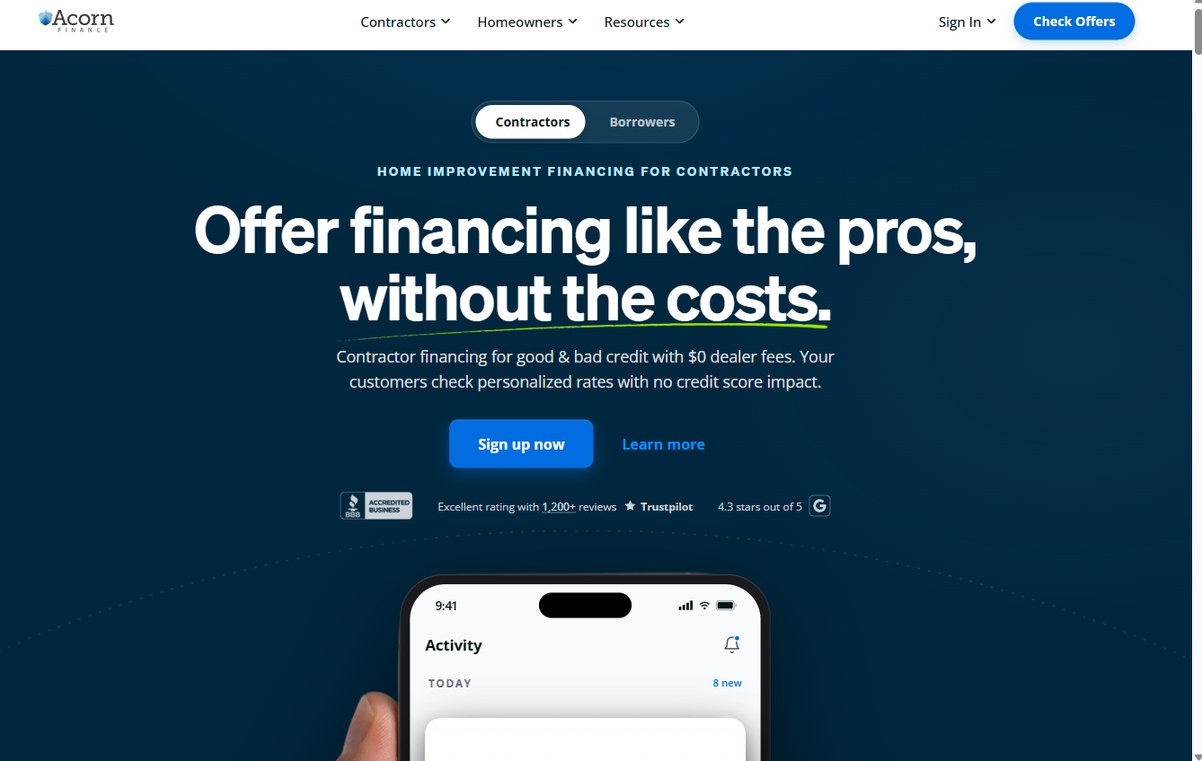
Think of Acorn Finance as a vital intermediary that links you to a wide array of funding sources. One of their most refreshing policies is the $0 dealer fee structure. In a sector often plagued by sneaky service charges that can bloat your debt by thousands, this transparency is a welcome change of pace. It is an ideal solution for those needing to fund both a plot purchase and immediate site prep, like clearing brush or laying a new driveway.
Speed is the name of the game here, making them a go-to for those eager to break ground. Because they welcome applicants regardless of their credit history, the entry barrier is much lower than what you would find at a major national bank. Rather than being discarded based on a FICO score alone, the breadth of their lender network increases your chances of finding a specialist who looks at your whole story.
For the modern debtor seeking versatility, this platform is a true lifesaver. You won’t find yourself trapped in a cycle of constant rejections despite having a complicated financial background. Their primary goal is to pair you with a lender capable of providing a definitive “yes” to your vision.
Pros:- $0 dealer fees for contractors and borrowers
- Custom rates available with no impact to credit during the search
- 4.3-star Trustpilot rating reflecting high client satisfaction
- Interest rates may not be as competitive as prime-tier lenders
2. JetzLoan
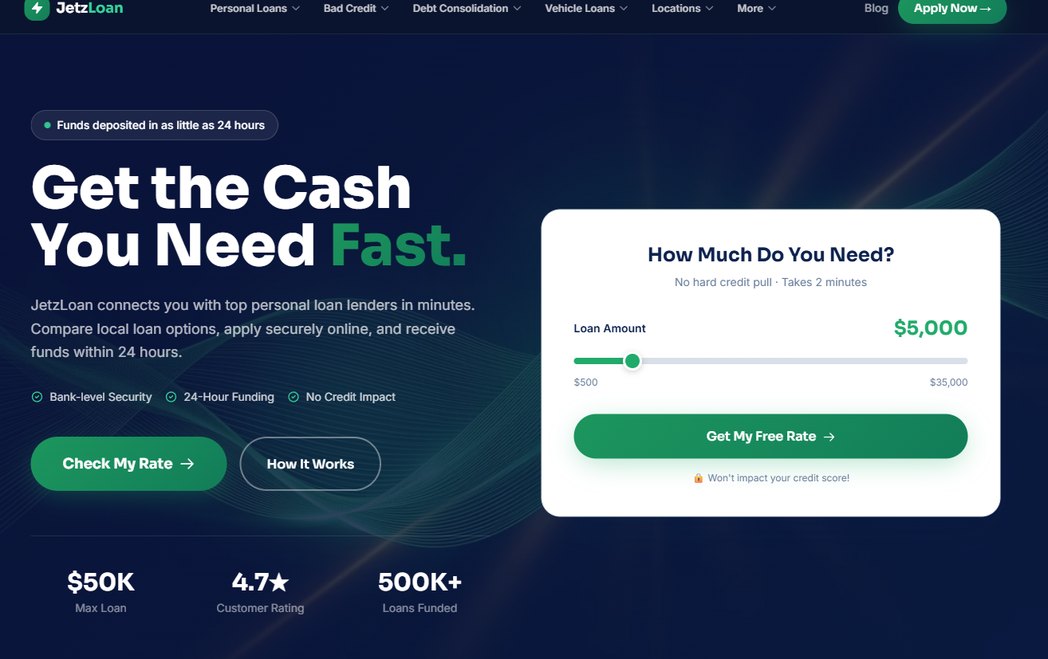
When you are racing against the clock, JetzLoan can move mountains. They have the ability to get cash into your hands in as little as a 24-hour window. This makes them an essential ally for rapid-fire land acquisitions or debt consolidation needs. In high-stakes markets, having this agility allows you to present a cash-like offer, often helping you jump the queue ahead of slow-moving traditional bank offers.
Navigating their application is a breeze, often taking a mere two minutes of your time. This is a goldmine for anyone who stumbles upon a great lot at an auction and needs to prove financial strength on the spot. Additionally, the ability to view potential rates without a hard inquiry is a massive benefit for those protecting a fragile credit score.
In a market that waits for no one, this is your high-speed lane. If a perfect piece of earth catches your eye on a Friday, you shouldn’t have to wait a month to secure it. They bridge that vital gap for those needing to strike while the iron is hot.
Pros:- Funds can be delivered in just 24 hours
- No hard credit inquiries for checking rates
- Maximum loan amounts reach up to $50,000
- Loans are structured as personal loans, not standard land mortgages
3. LightStream
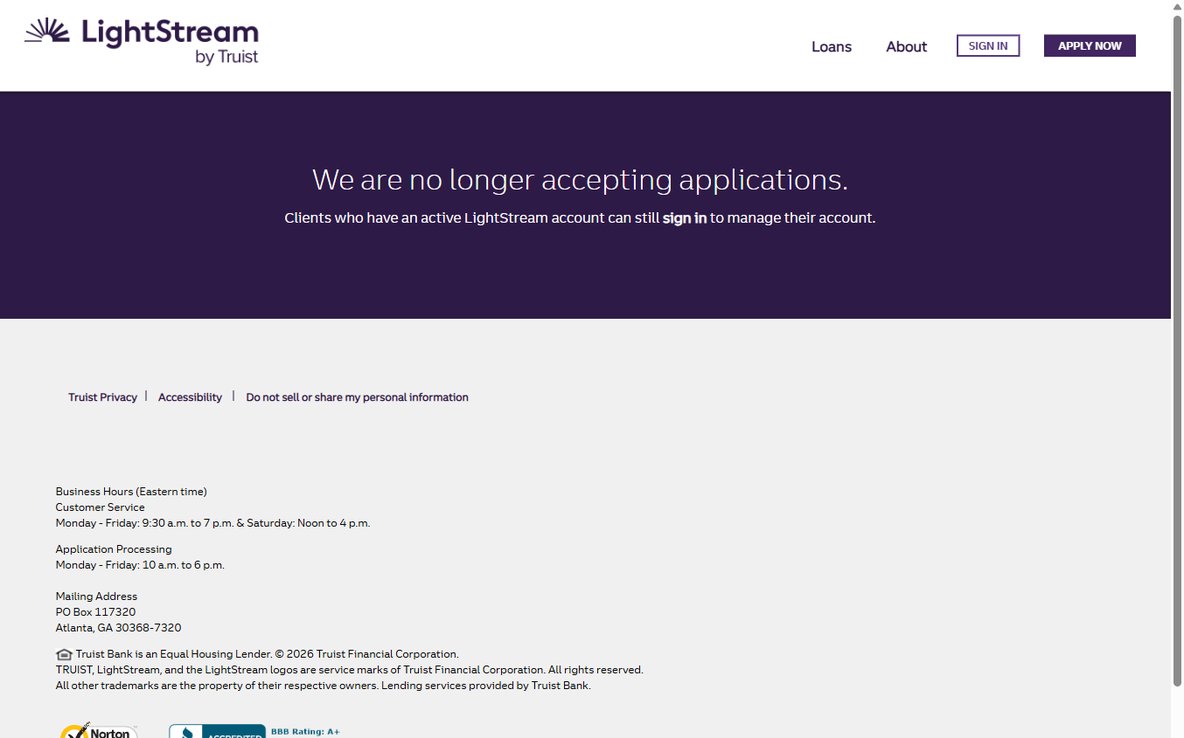
LightStream operates in an entirely different league. This provider is geared toward those who have already navigated the ups and downs of credit and come out on top. If your FICO score is in the excellent range, you will find hard-to-beat fixed interest rates here. It is a premium avenue for anyone prioritizing long-term stability and absolute certainty in their financial planning.
With loan ceilings hitting $100,000, there is plenty of room to maneuver for major land purchases or subdividing larger tracts. However, if you are currently battling a low credit score, this particular path is likely off-limits. Their automated systems are designed to prioritize high-tier credit scores and a steady stream of documented income.
This is the premier choice for high-credit individuals looking to sidestep the expensive interest rates often found in subprime territory. If your finances are in tip-top shape, this is arguably the most seamless route to ownership. They make the journey incredibly smooth for those who check all their boxes.
Pros:- Predictable, low fixed interest rates
- Loan limits reaching up to $100,000
- Strong reputation as a Truist-affiliated entity
- Exclusively for good to excellent credit; not suitable for bad credit
4. Country Bank

Country Bank takes a localized, traditional approach to the lending world. As an FDIC-insured institution, they possess a deep understanding of rural property that a giant national bank simply cannot replicate. While a massive corporation might balk at a lot lacking paved road access, this community bank understands local zoning nuances and the specific value of different landscapes.
A standout advantage is their 60-day rate lock, which acts as a safety net in shifting markets. This allows you to plan your next moves—like hiring surveyors or architects—without the fear of sudden interest rate hikes. They offer bespoke solutions for everything from untouched raw land to ready-to-build lots, recognizing that the risk for each is quite distinct.
This is the perfect choice for those wanting a lifelong partnership with their lender. They know the soil, the laws, and the people of the area. That specialized local insight can be the deciding factor between a closed deal and a missed opportunity.
Pros:- 60-day availability for rate locks
- Fully FDIC-insured protection
- Financing available for buildable lots and raw land
- Strictness of traditional bank approval workflows
5. Lendersa
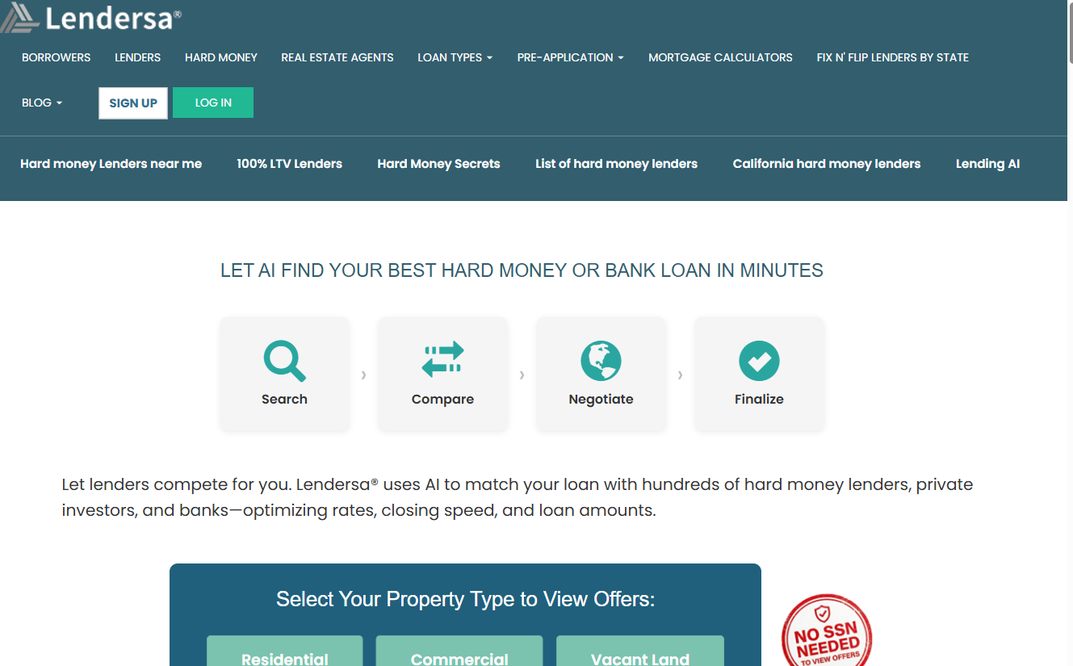
Lendersa is purpose-built for the savvy investor who needs to move at lightning speed. By leveraging artificial intelligence, they connect borrowers with hundreds of private investors and hard money sources to maximize closing times. This is a high-octane resource for real estate pros focusing on quick flips or rapid development. While a standard bank might spend weeks verifying a single survey, the Lendersa network is engineered for velocity.
If you are looking to pounce on an auction or a fast-paced property flip, this is your destination. They prioritize getting transactions wrapped up in a matter of days rather than months. When competition is fierce and a seller wants a quick exit, this speed is your greatest asset. They cover both commercial and residential assets, offering a massive net for diverse strategies.
Keep in mind that this isn’t for the casual buyer; the terms are often quite a departure from traditional mortgages. However, for the professional, that speed often justifies the higher cost. It is all about the velocity of your capital and how quickly you can flip the property for your next venture.
Pros:- AI-driven matching for optimal rates and lenders
- Tailored for auctions and rapid closings
- Supports both commercial and residential property types
- Hard money terms often carry much higher costs than standard loans
6. USDA
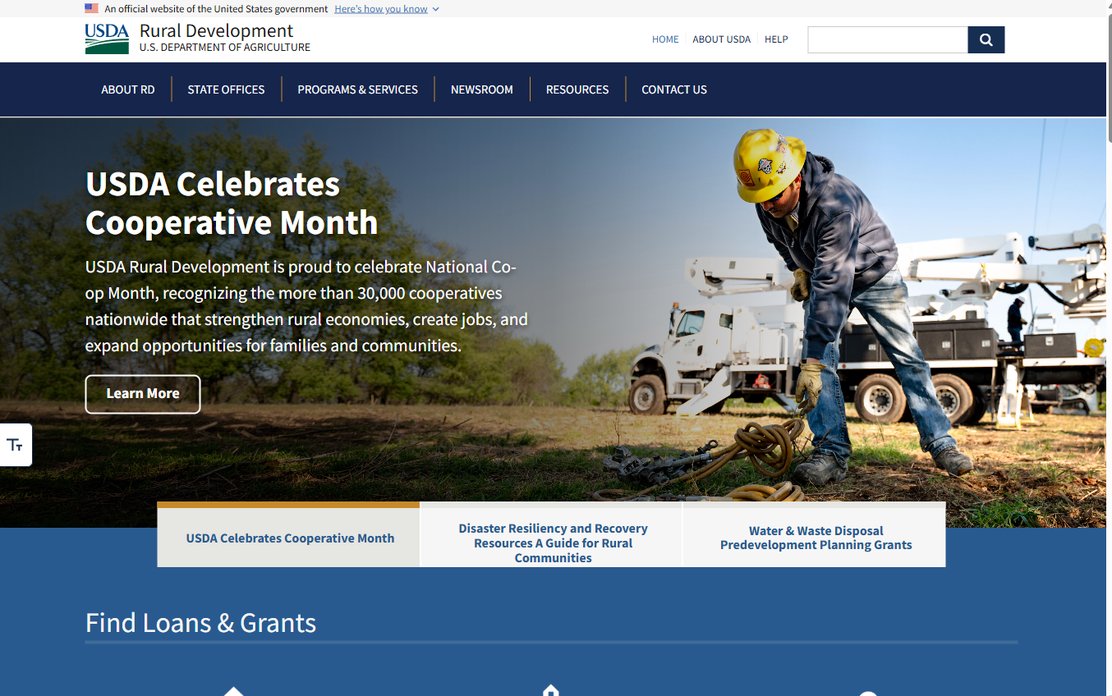
The USDA offers a government-backed alternative centered on the development of rural America. They provide a variety of loans and grants intended to help citizens buy, improve, or build homes within designated rural zones. This mission-driven lending helps stem rural depopulation by making it easier for homesteaders and young families to plant their roots.
This path is a dream for those hoping to build a life in a rural setting. Their programs are designed to boost local economies and provide paths for families who might otherwise be locked out due to income levels or low down payments. If you meet the requirements, this represents one of the most affordable ways to own land in the country.
The trade-off is a more intensive paperwork process and strict geographic limits, but the rewards are substantial. This program is built with a focus on people rather than purely on profit margins. If you qualify, it is an incredibly powerful vehicle for long-term homeownership.
Pros:- Stability through government backing
- Direct focus on supporting rural economies
- Diverse options including various grants and loans
- Eligibility is strictly limited by geography
Distinguishing Between Property and Dirt Financing
Before you dive into the application process, you must grasp how banks perceive different types of real estate. When you secure a mortgage for a house, the structure serves as a safety net for the lender. Should you fall behind on payments, the physical building acts as collateral to recover the bank’s investment.
Buying acreage is a different beast entirely. In this scenario, the only security is the soil itself. If local real estate trends take a nose dive, that plot might lose value rapidly. This volatility makes lending for unimproved land a much shakier proposition for most financial institutions compared to traditional housing.
Due to these inherent uncertainties, the hurdles for securing a land loan are often much steeper. You cannot expect the same terms you would get for a suburban home. Instead, prepare to shoulder more weight during the initial stages of your purchase.
Anticipating the Cost of Land Financing
Expect to dig deeper into your savings for the upfront costs. While a standard home might require a modest down payment, raw land often demands between 20% to 50% of the total price. It is a significant barrier to entry that keeps many developers on their toes.
Furthermore, interest rates for these loans tend to climb higher than standard residential mortgages. Because the risk is elevated, lenders charge a premium for the uncertainty. You are essentially paying for the privilege of owning a piece of the earth without the cushion of a structure.
The paperwork trail is also much longer and more complex. Lenders will want to scrutinize every detail regarding utility connections, easements, and legal access to the site. They need to be certain the land is actually usable for your intended purposes.
If you find yourself working with hard money lenders, the terms might get even more aggressive. You may encounter short-term repayment schedules that require a swift exit strategy. It is a high-stakes game that requires a clear plan from day one.
Navigating the Land Purchase Process
Buying dirt isn’t quite like buying a suburban home; it’s a different beast entirely. You don’t want to wake up one morning only to realize you own a stunning vista that is practically an island. Before you sign anything, you must walk the ground and verify every single detail.
First, make sure you can actually get to your new kingdom. A muddy track through a neighbor’s yard might look inviting, but it isn’t a legal right-of-way. Without documented, legal access to a public street, your property becomes a financial ghost that no bank will touch and no buyer will want.
Next, look beneath the surface. If you dream of building a sanctuary, you’ll need a septic system, which requires a successful “perc test” to confirm the soil drains. If the earth fails this test, your building plans are dead in the water. Also, keep a close eye on the power bill—literally. Pulling electricity to a remote site can easily swallow tens of thousands of dollars in unexpected expenses.
Don’t assume that a “rural” tag gives you a free pass to build whatever your heart desires. Local zoning laws are the rulebook of the land, and they dictate everything from how far back a house must sit from the road to minimum acreage requirements. You might also find strict rules regarding fences or keeping livestock on your property.
Finally, get a professional to draw the lines. Relying on an old fence line or a neighbor’s “I think this is the edge” is a recipe for disaster. A formal survey is the only way to confirm that the acreage you are paying for matches the dirt beneath your feet.
Finding the right financier is a deeply personal journey. If you are an investor looking to strike while the iron is hot, a hard money lender like Lendersa might be your fastest route, even if the interest rates are a bit steeper. On the other hand, if you want to build a forever home, a traditional bank or a USDA program might offer the stability you crave.
Watch out for those sneaky, hidden costs that can sink a budget. Unlike a pre-built house, raw land often requires immediate cash infusions for roads, water, and power. If you spend every cent on the purchase price itself, you might find yourself sitting on a beautiful patch of land that you can’t actually live on or even reach.
Protecting your credit is also vital during this high-stakes hunt. When you are shopping around, use services like JetzLoan or Acorn Finance to check rates without hurting your score. It’s better to be informed than to be blindsided by a damaged credit report. Do your homework, stay patient, and make sure your financing aligns with your ultimate vision.
Leave a Reply