
Score the Best Deals on Flooring Financing for Your Home Remodel
Last updated: 2026-10-16
Tackling a home remodel often feels like swallowing a giant pill. You might find yourself staring at peeling linoleum or lackluster hardwood, feeling that sudden, desperate itch to renovate. It’s a heavy realization when the price tag for new porcelain tile or laminate hits your desk.
Budgeting for these upgrades is a real headache for most families. Even if you select high-end engineered hardwood, the total bill can skyrocket. You have to account for things like underlayment, subfloor prep, and those tricky transition pieces that add up quickly.
Navigating the payment side of things is every bit as vital as picking out a beautiful color palette. You might need a quick injection of cash for a minor fix or a robust long-term strategy for a complete overhaul. In this year of 2026, the landscape for credit is quite diverse.
The choice you make right now determines your future peace of mind. A poor financial move turns a dream project into a bitter grudge against your bank account. Picking the right path ensures your new floors bring joy rather than constant stress.
- FastLendGo
- HFS Financial
- Acorn Finance
- Wisetack
- Affirm
- Floor Daddy
Comparing Top Financing Providers for Your Remodel
Finding the right money lender involves more than just hunting for the smallest percentage on a website. You have to consider how quickly cash lands in your pocket and the headache factor of the paperwork. While a low interest rate sounds sweet, its true cost depends on your timeline. Take a $10,000 loan at 10% interest over a 3-year stretch; you’ll pay roughly $1,750 in interest. Extend that same loan to 7 years, and that cost jumps to nearly $4,000.
It is a balancing act between immediate monthly relief and the total amount of debt you’ll carry over time. When we analyzed these providers, we focused on speed, ease of access, and how they affect your credit profile. We wanted to see who serves everyone, from those with perfect credit scores to people just trying to keep their heads above water during tough times.
Our research also prioritized transparency. We looked for companies that lay all their cards on the table rather than those hiding extra fees in the fine print. We sought out digital application processes that are intuitive and straightforward to navigate.
| Company | Borrowing Limits | Credit Standards | Main Advantages |
|---|---|---|---|
| FastLendGo | $500 – $5,000+ | Good to Bad Credit | Rapid funding |
| HFS Financial | see site | No equity required | Low-fixed rates |
| Acorn Finance | see site | Good and Bad Credit | $0 dealer fees |
| Wisetack | see site | Soft credit check | Up to 24-month 0% APR |
| Affirm | see site | No credit check options | Flexible payment plans |
| Floor Daddy | see site | see site | 48 Months 0% Financing |
1. FastLendGo

Think of FastLendGo as a quick financial bridge for various urgent needs, including unexpected home repairs. If you find yourself in a tight spot and need to scout local personal loan options without a mountain of red tape, this is a great tool. It is perfect for those “emergency” moments—like a sudden water leak under your flooring or a broken step—where getting funds instantly matters more than finding the lowest possible rate. (fastlendgo.com)
This platform caters to a broad demographic of financial backgrounds. Whether you need a quick $500 for a minor fix or a larger $5,000 sum for a bigger job, the system is built to match high-income earners and those with less-than-perfect credit. The matching technology essentially works to bridge the gap between your current credit standing and what different private lenders require.
Pros:
- Handles a wide range of amounts from $500 up to $5,000 and more.
- Accommodates various credit profiles, including fair to bad.
- Offers a simple, digital way to weigh different personal loan offers.
Cons:
- Rates might not be the most competitive for customers with top-tier credit.
2. HFS Financial

HFS Financial is a standout for people who want to avoid the stress associated with traditional equity-based loans. They are an excellent option for homeowners looking to refresh their floors without ever putting their property up as collateral. Conventional Home Equity Lines of Credit (HELOCs) can be a scary prospect because they rely on your house as security; if you hit a snag with payments, your home could be at risk.
This lender offers a different path that keeps your home’s title completely separate from your personal loan. The big selling point here is how quickly you can get an answer. They aim to move you from the “dreaming” stage to the “installing” stage very fast, so you aren’t waiting weeks for a bank to finish their review while your contractor is standing by the door.
Pros:
- No need to provide any home equity for the loan.
- Provides stability through low-fixed rates.
- Rapid approval timing for those ready to start projects.
Cons:
- Fixed rates may lack the flexibility found in variable-rate options in certain regions.
3. Acorn Finance
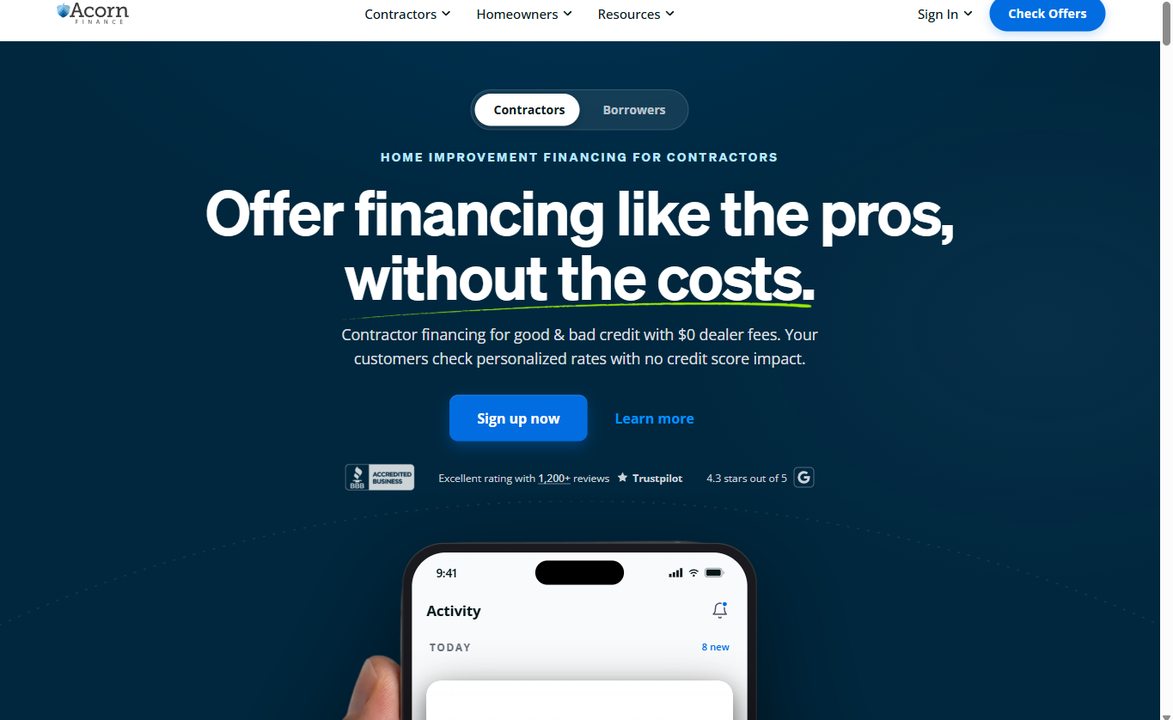
Acorn Finance is a heavy hitter for anyone trying to sidestep the “hidden costs” that often tag along with contractor financing. They focus on connecting you with a variety of lenders, ensuring those annoying dealer fees don’t eat into your renovation budget. Sometimes, contractors add a 10-20% surcharge to the bill just for using their preferred lender; Acorn helps you bypass that by facilitating direct matches.
One of the most helpful features is being able to view personalized rates without a hard credit check. This is a huge relief for anyone nervous about their credit score dropping before they even know if the project is financially feasible. You can essentially use the tool to establish a “budget range” before even asking a contractor for a quote, which gives you better leverage during negotiations.
Pros:
- Consumers are spared from any dealer fees.
- Soft credit checks let you check rates without impacting your score.
- Earns high marks for its user experience.
Cons:
- Because they connect you to multiple lenders, rates can fluctuate wildly between offers.
4. Wisetack
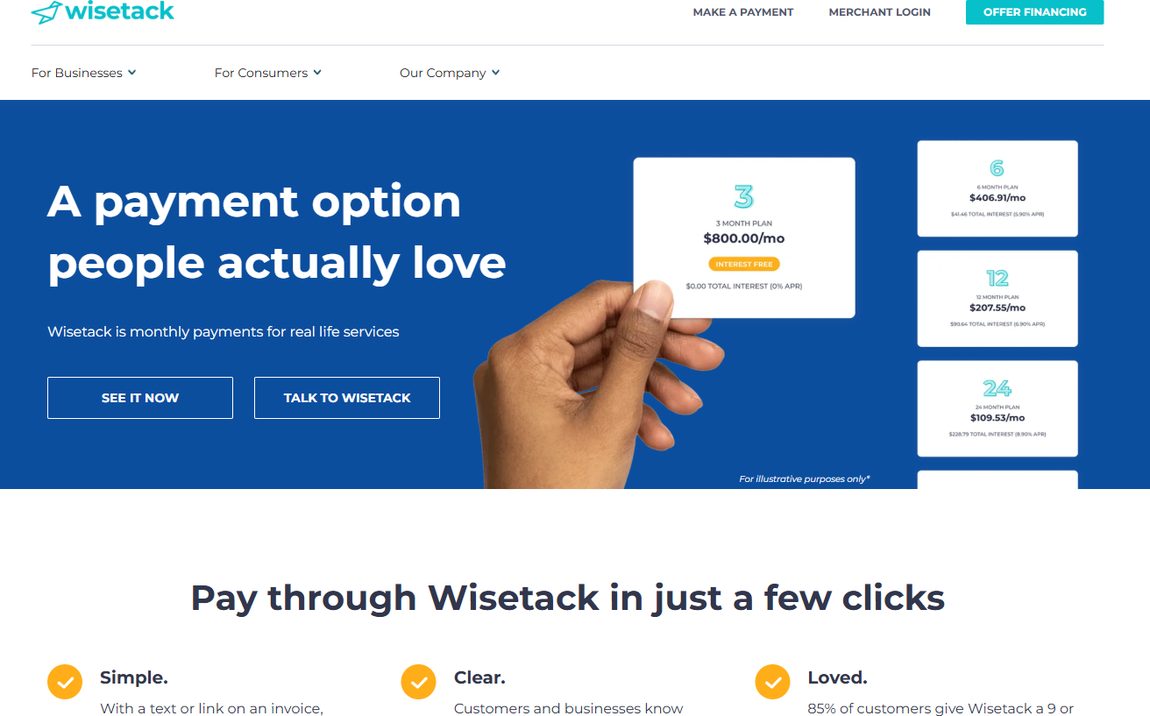
Wisetack has become a go-to for many service professionals because it plugs directly into their existing payment systems. It functions less like a traditional bank and more like a seamless transaction between a client and a contractor. For the homeowner, this translates to less paperwork and much more directness. You often don’t even need to shop for a loan; your installer might already use Wisetack.
If your ideal way to pay is through a simple invoice link or a quick text message, this is your best bet. They offer a 0% APR option for up to 24 months, which is a lifesaver if you want to spread out your costs without paying a penny in interest. It works incredibly well for medium-sized jobs, like updating the floors in a master bathroom or one large room.
Pros:
- Approval happens incredibly fast, often in just 60 seconds.
- Offers 0% APR windows for up to 24 months.
- Maintains high levels of customer satisfaction.
Cons:
- The availability and specific terms depend entirely on your contractor’s setup.
5. Affirm

Affirm has essentially become a titan in the “Buy Now, Pay Later” world. It is incredibly handy for smaller tasks or when you are buying materials from big-box home improvement stores that partner with them. If you are a DIY enthusiast and just need $2,000 for luxury vinyl plank, Affirm is frequently the path of least resistance.
The level of flexibility here is hard to beat. You can pick between interest-free plans for short durations or longer, more manageable monthly payments. It’s a very clear way to shop; you see your exact total upfront. There are no “gotcha” moments where rates suddenly spike mid-way; once the sale is done, your terms are locked in tight.
Pros:
- Very transparent interest terms with no hidden fees.
- Offers various plans, including interest-free options for specific buys.
- Extremely user-friendly via web or mobile app.
Cons:
- You might find that not every flooring contractor accepts Affirm.
6. Floor Daddy
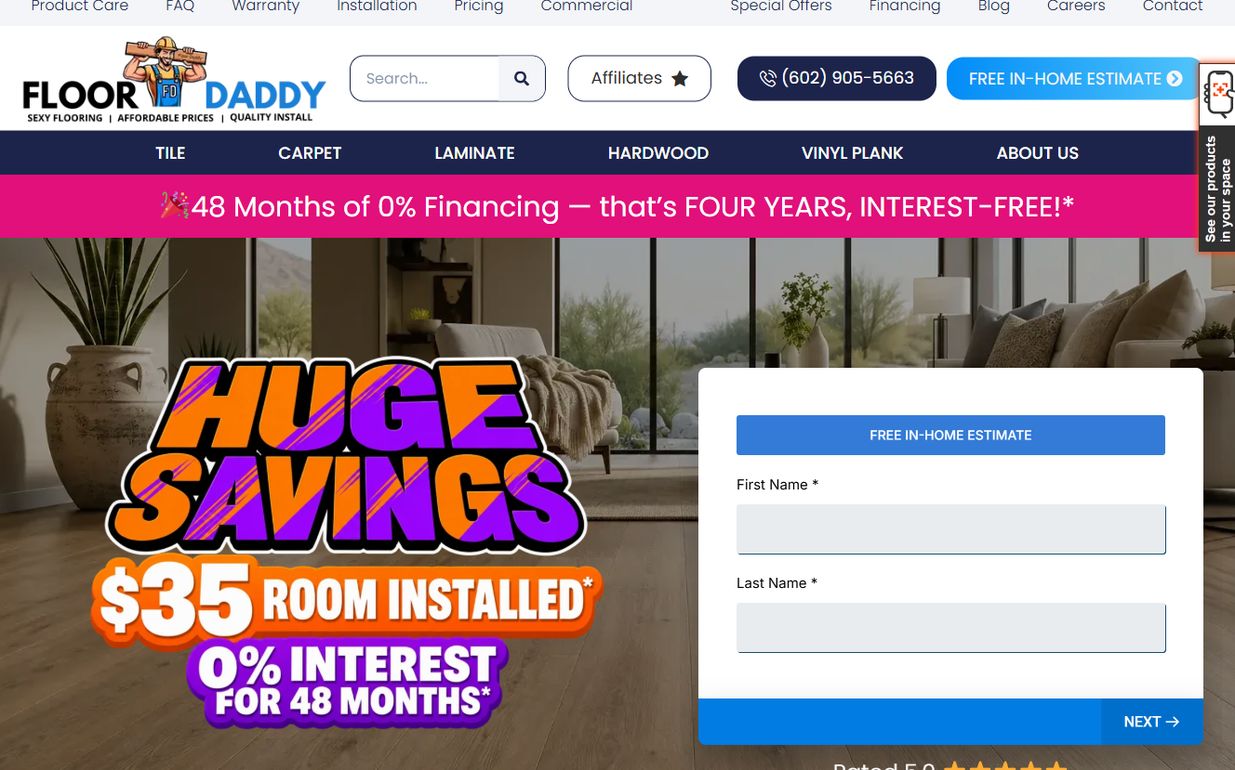
Floor Daddy is a niche, local player that cares as much about the installation as the financing. This is perfect for the person wanting a “one-stop shop” where the labor and the payment plan are bundled together. This setup helps prevent the awkward situation of having beautiful new materials sitting in your driveway while you lack the funds to pay the professional to lay them.
They provide a rare and significant 48-month 0% financing option. This allows families to tackle massive renovations without the heavy weight of interest over four years. For a $10,000 project, a $208 monthly payment is much easier to manage than dropping $10,000 at once or facing high-interest credit card bills.
Pros:
- Offers long-term 0% financing for up to 48 months.
- Includes options for dustless removal and professional floor prep.
- Boasts a stellar 5.0-star reputation.
Cons:
- The financing is likely restricted specifically to their own installation services.
Evaluating Different Borrowing Options
Before you sign on the dotted line, you really need to grasp how various lending structures differ from one another. Making a blunder by picking an unsuitable loan can lead to messy tax headaches or a spiral of unending debt. Think of it like picking a foundation for your floor; the wrong choice can ruin the whole project later on.
Take a moment to weigh your options carefully. You want a plan that matches the scope of your renovation perfectly. Using the breakdown below, you can decide which path aligns with your personal financial goals and the specific needs of your house.
Don’t just rush into the first offer you see. Each method carries its own unique set of pros and cons that can drastically alter your monthly budget. It is better to be safe than sorry when your home’s equity is on the line.
| Lending Method | Ideal Use Case | Primary Danger | Processing Time |
|---|---|---|---|
| Personal Loan | Total autonomy over funds for DIY tasks or various hired pros | Elevated interest costs if your credit score is lower | 1–3 Business Days |
| 0% APR Financing | Luxury material upgrades for medium-sized renovations | Full repayment is mandatory before the promotional window closes | Instant (at checkout) |
| Home Equity Loan | Massive, house-wide remodeling endeavors | Your residence serves as security for the money borrowed | Weeks to Months |
| Buy Now, Pay Later | Minor fixes and buying specific supplies | Simple to blow your budget on tiny purchases | Immediate |
When you are weighing these choices, always keep your long-term “exit strategy” in the back of your mind. If your plan is to list your house on the market in just two years, grabbing a long-term home equity loan would be a major blunder. This is because such a loan places a lien on your property title that you must settle before closing a sale.
On the flip side, if you intend to remain in your residence for the next ten years, a fixed-rate personal loan might be your best friend. It offers a steady, reliable way to boost your home’s market value. You won’t have to worry about the unpredictable swings of a variable interest rate keeping you up at night.
Deciphering the Fine Print of Flooring Loans
Don’t let a small monthly bill blindside you later. It is easy to feel a sense of relief when the immediate cost looks manageable, but you must gaze at the grand total. A payment that feels like a breeze over five years might actually drain your wallet far more than a steeper, twelve-month commitment.
When you sit down with a lender, demand the “Total Cost of Borrowing” figure. This specific number is the real truth-teller. Using it is the only way to truly weigh two competing offers against each other fairly. Without it, you are essentially flying blind in a storm of interest rates.
I’ve seen homeowners fall into the trap of thinking low payments are a steal. In reality, they are often just a way to spread out the pain. Always, always scrutinize the full sum you will have paid by the final installment of your loan.
It is a rookie mistake to believe that “no credit check” means zero impact on your profile. While many lenders let you peek at your rates via a soft inquiry, the actual agreement usually requires a formal check. It’s like testing the water with your toe before jumping into a deep pool.
Use those soft-pull tools to scout the market first. This keeps your credit score tucked away safely while you hunt for the best deal. A solitary hard inquiry might shave 5 points off your score, but a flurry of them looks like “credit hunger” to a bank. This red flag can skyrocket your interest rates instantly.
Protect your reputation by being selective with who you ask for a formal report. Shopping around without a strategy is a recipe for a damaged credit history and much more expensive debt in the long run.
Before you sign on the dotted line, make sure your renovation plans are set in stone. Trying to squeeze more money out of a loan once the crew has arrived is like trying to change tires while the car is moving. Once the old planks are up, the real work begins.
Contractors often find ghosts under your floorboards, such as uneven joists or rotting subfloors. These hidden gremlins can blow your budget wide open in a heartbeat. Because of this, you should always bake a 15-20% “contingency buffer” into your initial request. It is your financial safety net against the unknown.
If you don’t plan for these hiccups, you’ll find yourself staring at a half-finished floor and an empty bank account. Adding a little extra to your request now is much simpler than scrambling for funds mid-project. Prepare for the surprises, and you’ll sleep much better at night.
Leave a Reply